Designing a High-Trust, High-Conversion Deposit Experience
Reducing onboarding friction and increasing deposit conversion crypto derivatives trading in India at Delta Exchange.
1️⃣ Context
In 2024, Delta Exchange expanded into the Indian market.
Globally, Delta Exchange operates as a full crypto trading platform offering:
Spot trading
Futures contracts
Options trading
However, the Indian regulatory environment required a different product architecture.
The India platform launched as a crypto derivatives-only exchange, meaning:
Users cannot buy or own crypto assets
All capital remains within the Indian banking system
Traders interact only with derivatives contracts
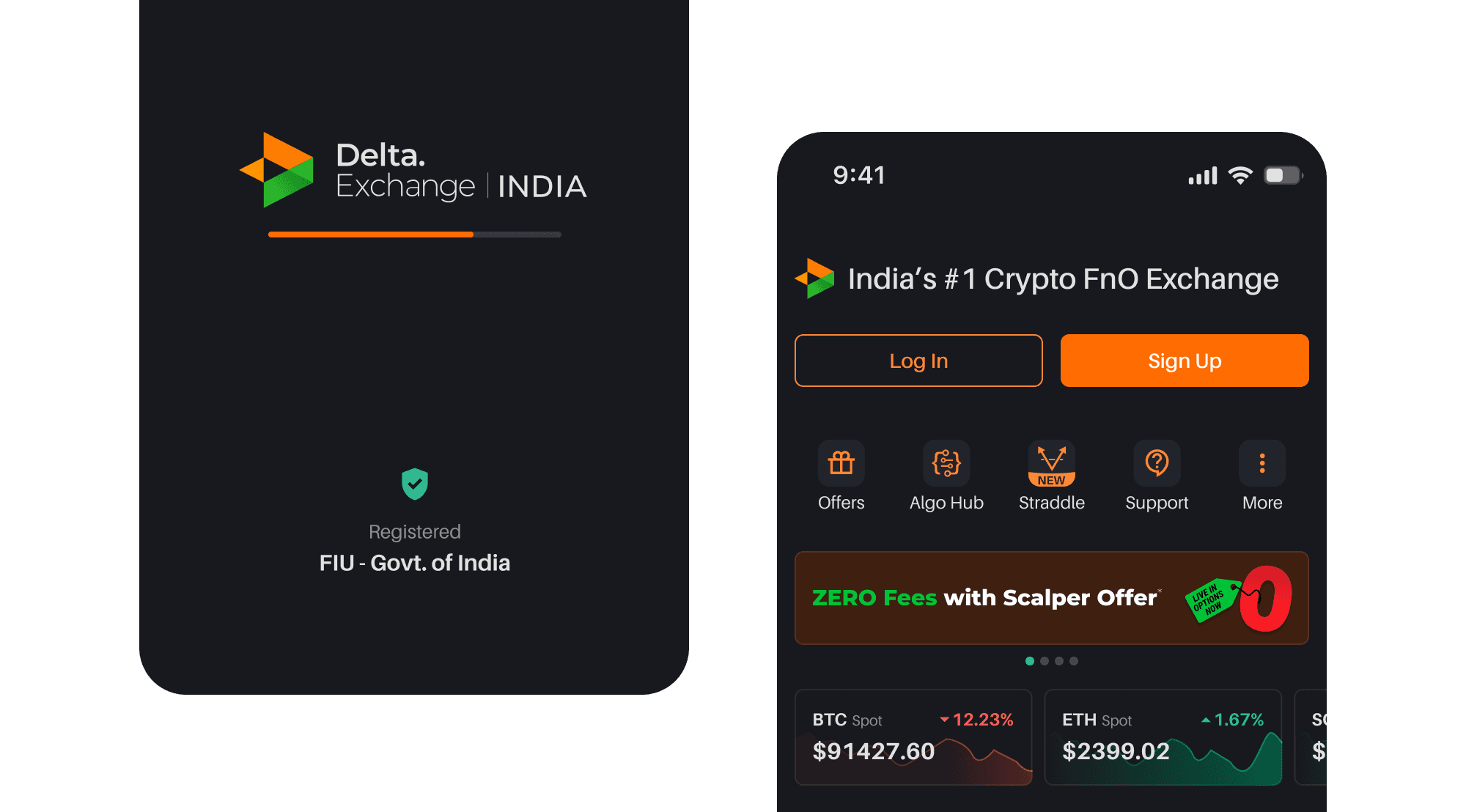
The platform registered with the Financial Intelligence Unit (FIU-India) to comply with AML and financial reporting requirements.
This regulatory constraint introduced a critical challenge:
Users had to deposit fiat money into a derivatives trading platform before experiencing any value.
This created a trust and conversion problem at the very start of the user journey.
2️⃣ The Product Challenge
Growth metrics revealed a severe bottleneck in the onboarding funnel.
When Delta Exchange expanded into India as a derivatives-only platform, we faced a critical growth bottleneck: users were signing up, but not depositing — and without deposits, derivatives trading never began.
Funnel Dropoffs (Before Redesign)
KYC drop-off: 34–38%
Bank addition drop-off: 40–45%
Deposit drop-off: 36–40%
First trade conversion: 10–12%
New User Journey (After Signup)
→ KYC Verification
→ Bank Account Addition
→ Deposit Funds
→ First Trade
Two stages stood out as major conversion barriers:
Bank account addition
Deposit flow
Without solving these two steps, users never reached trading, which directly impacted:
Platform liquidity
User activation
Revenue growth
3️⃣ Understanding the Problem
To diagnose the drop-offs, I combined quantitative funnel analysis with qualitative research.
🎯 Reviews, Comments, Support Ticket Analysis
I analyzed several months of:
Reviews of the platform from many different sources
Observed related comments
Deposit-related support tickets
Observed KOL (Key Opinion Leader) assessments of using the platform.
Recurring pain observed:
Problems Discovered
User Concerns
Platform trust
"Is this platform legit, Is it legal in India?"
Deposit trust
“Money deducted but not credited yet”
External redirects
“Why am I leaving the exchange to deposit?”
Deposit failures (during higher volatility)
“Transaction failed but amount debited”
The largest theme was lack of trust during the first deposit.
Users were uncomfortable sending money to a trading platform via external bank pages.
🎯 Onboarding Funnel Audit
The biggest friction was not signup, It was bank addition + deposit.
Users were willing to register, but were not willing to transfer money. The bank account addition step required users to manually enter:
Bank account number
IFSC code
OTP authentication
This created high cognitive load and friction, particularly for first-time traders.
Signup
KYC
Bank Addition
Deposit
First Trade
100%
65%
48.6%
30.13%
26.51%
Major Friction Points
Bank account addition
Internet banking redirection
Growth Blockers
Significant drop-offs due to account setup and deposit issues.
🎯 Competitive Benchmarking
Studied deposit flows of major exchanges:
Binance
Bybit
WazirX
CoinSwitch
CoinDCX
Mudrex
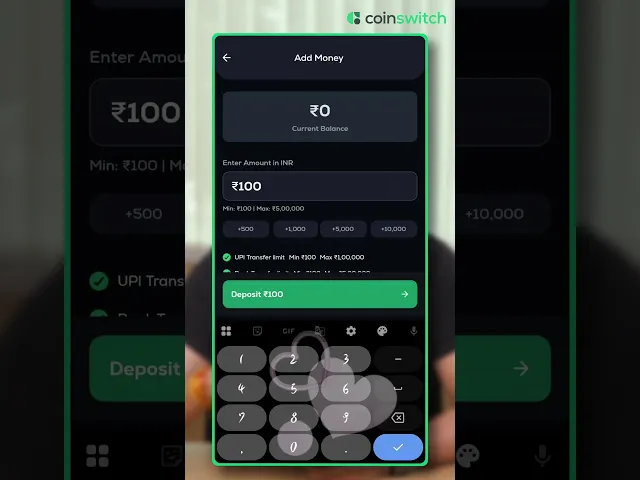
As of March 2024, I conducted a comprehensive analysis of multiple cryptocurrency exchanges operating in India and observed that none had effectively integrated UPI as a deposit method.
Current landscape (as of April 1, 2026):
While several platforms have since introduced UPI-based deposit flows, the overall user experience remains suboptimal and inconsistent. This is particularly concerning given that UPI is one of the most trusted and widely adopted payment methods in India, with users already highly familiar with its seamless usage across merchants and services.
My Personal Comments

1. Binance (Rating: 1/5)
Binance facilitates deposits through a P2P (peer-to-peer) transaction model, which introduces multiple manual steps:
User initiates a deposit request
A P2P merchant connects via chat
Merchant shares a UPI QR code
User completes payment using their UPI app
User submits payment confirmation
Merchant verifies and transfers funds to the user’s Binance wallet
Wallet balance is updated after a delay
Additionally, users incur implicit forex conversion charges, as INR is used to purchase USDT.
Assessment:
This flow is highly fragmented, time-consuming, and introduces unnecessary dependency on third-party merchants, resulting in a poor user experience.
2. Bybit (Rating: 1/5)
Bybit follows a similar P2P-based deposit mechanism as Binance, involving manual coordination between users and merchants.
Assessment:
The experience mirrors Binance’s inefficiencies, with high friction and lack of reliability.
3. WazirX (Rating: 0/5)
WazirX currently supports only traditional bank transfers, with no UPI integration.
Assessment:
This creates a significant usability gap, especially in an Indian market where UPI is the dominant payment method.
4. CoinSwitch (Rating: 4/5)
CoinSwitch provides a well-structured UPI deposit flow, including:
UPI ID-based transactions
Whitelisting mechanisms for added security
Assessment:
The experience is relatively seamless, secure, and aligned with user expectations. Minor improvements may still be possible, but overall execution is strong.
5. CoinDCX (Rating: 3/5)
CoinDCX offers a direct UPI payment option, which is a step in the right direction. However, there are notable usability and compliance concerns:
Absence of UPI ID whitelisting
Users are prompted to pay via specific UPI apps rather than a fixed UPI ID
Potential mismatch between registered bank account and payment account
Increased risk of funds being delayed, lost, or flagged under AML (Anti-Money Laundering) regulations
Assessment:
While the presence of UPI is beneficial, the lack of structured safeguards creates cognitive overhead and potential trust issues for users.
6. Mudrex (Rating: 3/5)
Mudrex offers a UPI-based deposit flow similar to CoinDCX, but without explicit cautionary messaging.
Assessment:
While functional, it lacks both user guidance and protective guardrails, which may lead to confusion or errors during transactions.
🎯 Behavioral Finance Insight
Depositing money into a trading platform is a high-anxiety moment for new users.
Common fears include:
Funds deducted from source bank but delayed in wallet reflection
Losing money due to failed transactions
Support tickets frequently mentioned: “Money deducted but not showing.”
Anxiety peaks in the gap between deduction and confirmation.
Therefore, deposit experiences must prioritize:
Trust signals + simplicity + speed.
4️⃣ Key Insights
Insights from competitive analysis
Despite UPI's strong foundation of trust and adoption, most crypto exchanges have not been able to leverage UPI effectively to deliver a smooth and intuitive deposit experience.
Our approach:
We identified this gap as a critical opportunity. Our objective was to harness the familiarity and reliability of UPI to design a deposit flow that is genuinely simple, frictionless, and aligned with user expectations in the Indian market.
Exchange
Deposit flows
Remarks
Binance
UPI payment via P2P transfer
Lengthy & time taking
Bybit
UPI payment via P2P transfer
Lengthy & time taking
CoinDCX
UPI payment - UPI app integration (not UPI ID)
Decent flow but bad practice
WazirX
No UPI payment
None
CoinSwitch
UPI payment - with whitelisted UPI ID
Good Flow
Mudrex
UPI payment - UPI app integration (not UPI ID)
Decent flow but bad practice
Overall Strategic Takeaway
Across the ecosystem, there is a clear gap between UPI adoption and UPI experience quality.
The opportunity lies in:
Designing trust-driven payment flows
Implementing UPI ID whitelisting as a default safeguard
Reducing user effort and decision-making during deposits
Aligning the experience with existing mental models of UPI usage in India
A well-executed UPI flow should feel instant, predictable, and effortless—matching the standards users expect from everyday digital payments.
Limit Transparency & Segmentation Strategy
UPI limit: ₹1L
Bank transfer limit: Higher / No limits
User segmentation:
Basic Traders: ~50%+
Intermediate: ~30–40%
Expert: ~10%
Institutions: ~1%
Strategic choice:
Optimize for majority acquisition first.
Preserve power-user flexibility.
Experts still had bank transfer.
Beginners had seamless UPI.
These insights shaped the design strategy for the redesign.
5️⃣ My Role
Product Designer (Growth)
Team context:
2 designers across the entire product team
I owned the growth and onboarding experience
Platforms covered:
Responsibilities included:
Redesign of the fiat deposit flow
UX architecture redesign for onboarding
Research synthesis
Experiment design and A/B testing
Collaboration with engineering, compliance, and growth teams
In 2 months, I redesigned the KYC, bank addition, and deposit flow by:
Introducing UPI-based penny-drop bank verification (built in-house)
Making UPI the default deposit method
Integrating a strategically positioned FIU-India compliance badge (my initiative)
Streamlining KYC and reducing redirection friction
6️⃣ Design Strategy
The redesign focused on three strategic pillars.
Trust
Communicate legitimacy clearly via compliance signals and transparent payment flows.
Speed
Reduce time required to complete the first deposit.
Simplicity
Minimize manual financial data entry.
7️⃣ Key Product Decisions
⭐️ FIU Compliance Signaling
Problem: Crypto distrust in India.
Observation: We were FIU registered — but not leveraging it visibly.
Now the platform prominently displayed FIU-India registration badges within the onboarding and deposit flows. This reframed compliance from legal necessity to build trust signal.
Purpose:
Reinforce regulatory legitimacy
Reduce perceived risk when depositing money
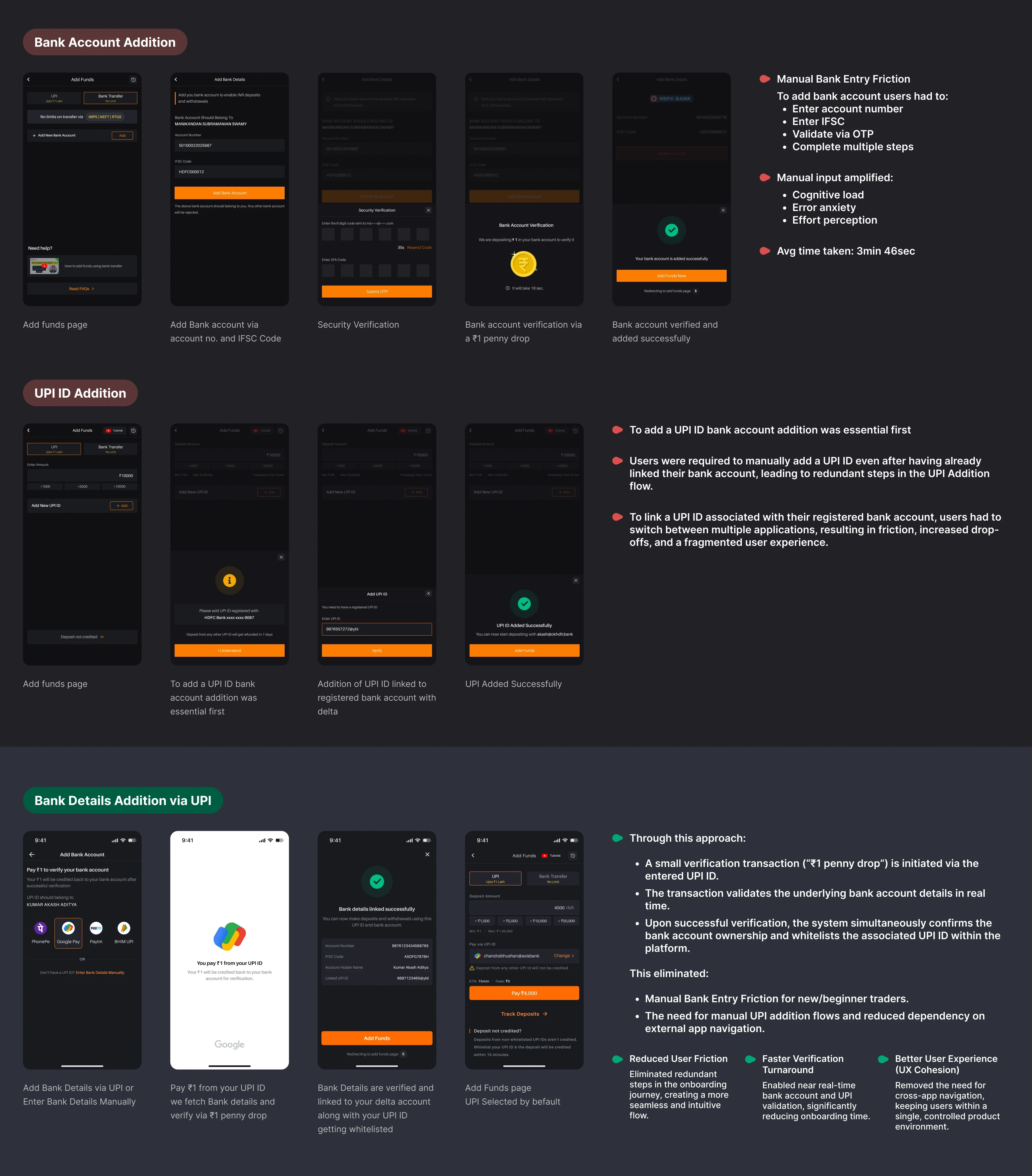
⭐️ UPI-Based Bank Verification (Penny Drop)
Instead of manual bank entry, users could now verify their bank account using UPI ID.
New bank verification flow:
→ User adds UPI ID
→ ₹1–2 penny-drop triggered
→ Bank details auto-fetched
→ Bank account whitelisted
Why this worked:
Eliminated manual entry
Reduced cognitive load
Reduced perceived effort
Created instant validation feedback
This was one of the single biggest structural improvement.
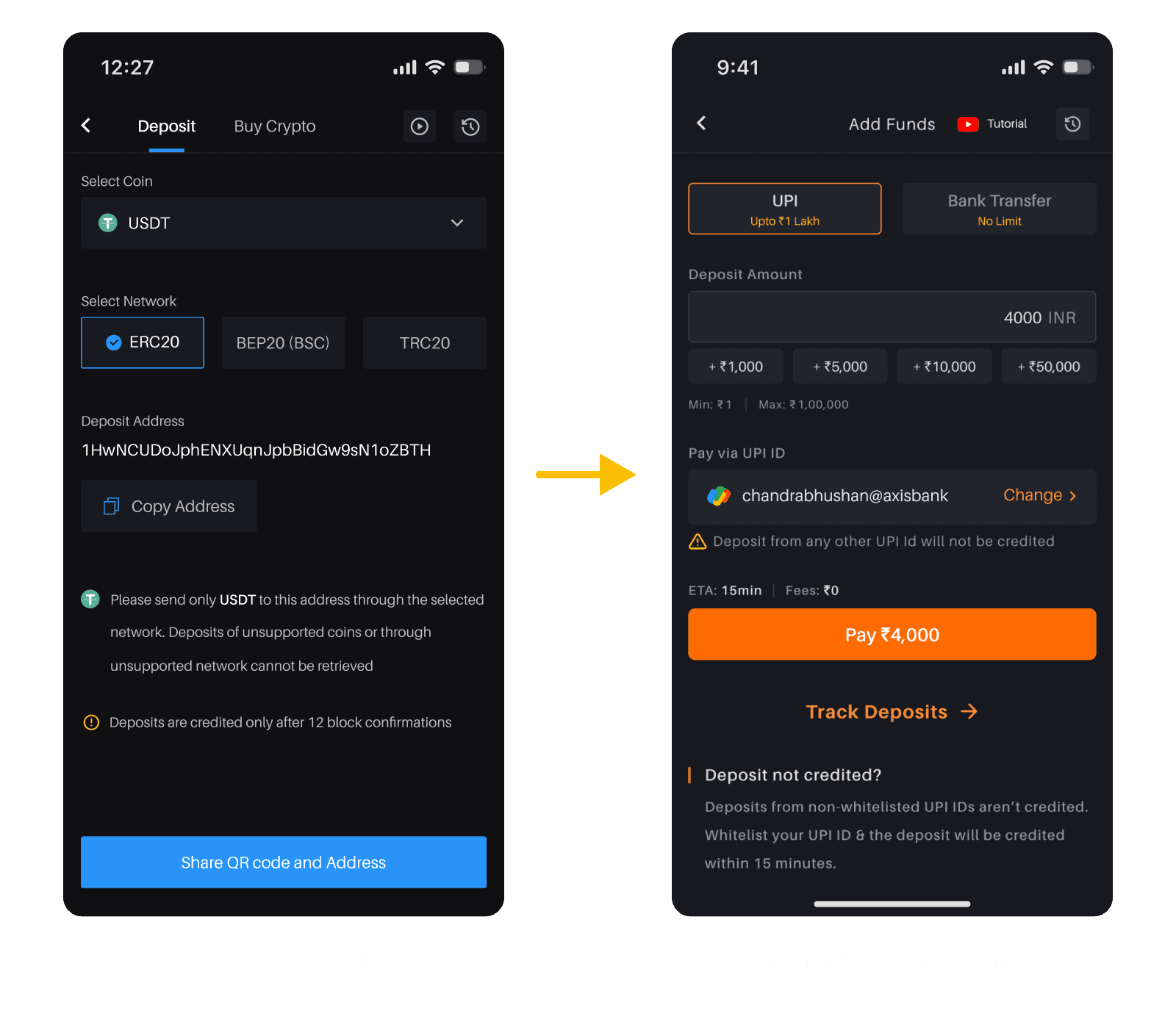
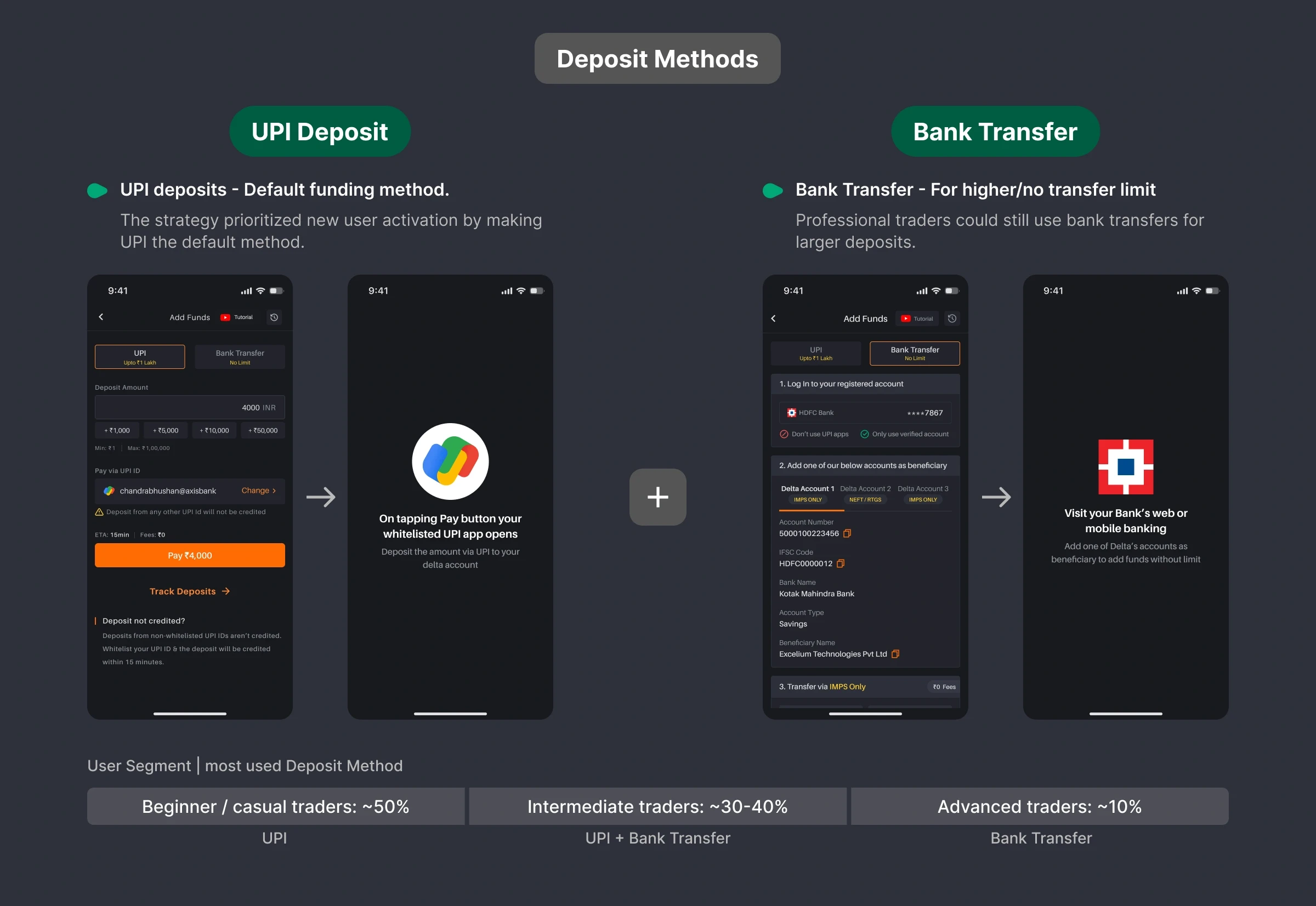
⭐️ Default Deposit via UPI
UPI deposits were set as the default funding method.
Previously: Internet banking redirection.
Psychological impact:
Left the Delta interface
Lost visual continuity
Fear of phishing
Worried about failed reflections
Trust eroded instantly.
Now: UPI was the default option.
Psychological impact:
Familiar interaction pattern
Reduced redirection anxiety
Faster completion loop
Lower abandonment
Users stayed within Delta environment.
Advantages:
Instant settlement
High familiarity among Indian users
Reduced abandonment rates compared to bank redirects
⭐️ Power User Deposit Path
UPI default limit: ₹1L
Bank transfer: Higher / No limits
Professional traders often deposit larger amounts.
UPI has a ₹100,000 transaction limit, which is restrictive for high-volume traders.
To support this segment, the redesign preserved internet banking deposits with higher limits.
Deposit options were clearly displayed with visible transaction limits.
⭐️ Streamlined KYC (Additional)
This is a classic fintech tension: Reduce friction without increasing risk.
We had to comply with all technical & compliance constraints
Mandatory KYC under FIU registration
AML enforcement
FIU compliance obligations
Bank whitelisting required
Reduced friction by:
Minimizing redundant fields
Clarifying progress states
Improving error messaging
Improving visual hierarchy
Impact:
Lower cognitive load
higher KYC completion.
8️⃣ UX Architecture
Before Redesign
Signup
→ KYC Verification
→ Manual Bank Entry
→ OTP Authentication
→ Redirect to Bank Website
→ Deposit Confirmation
After Redesign
Signup
→ KYC Verification
→ Add Bank via UPI ID
→ Automatic Bank Verification
→ Instant UPI Deposit
This removed two major friction points:
• Manual bank data entry
• External bank redirects
9️⃣ Trade-Offs
The major design trade-off involved deposit limits vs usability.
Deposit Method
Advantage
Limitation
UPI
Instant deposits
₹1L limit
Bank transfer
Higher limits
Slower process
Given the user distribution:
User Type
Share
Beginner / casual traders
~50%
Intermediate traders
30–40%
Advanced traders
~10%
Institutions
~1%
The strategy prioritized new user activation by making UPI the default method.
Professional traders could still use bank transfers for larger deposits.
1️⃣0️⃣ Results
After launch, the redesigned deposit experience significantly improved onboarding performance.
Deposit Experience Improvements
Metric
Improvement
Avg deposit time (UPI)
42s
Deposit frequency
+16%
Avg deposit size
+14.9%
Payment failure rate
Reduced to 4–5%
Most UPI deposits were instant, improving user confidence.
Funnel Improvements
Stage
Before
After
KYC dropoff
34-38%
20–22%
Bank addition
40–45%
12–16%
Deposit
36–40%
10–12%
First trade
10–12%
7–8%
First trade conversion improved by 28.2%.
Operational Impact
Support tickets related to deposits decreased by 7–8%, reducing operational overhead for the support team.
📊 Business Impact
The improved onboarding pipeline helped enable broader platform growth.
Platform scale:
• User base: 100K → 1M+ users
• Daily trading volume: $30M → $7B+
• Google Play: 1M+ downloads | 4.3 rating
• App Store: 4.6 rating | 18K reviews
These outcomes were influenced by multiple factors including marketing and market expansion.
However, the redesigned deposit system significantly reduced the friction of capital entry, allowing more users to reach trading activity.
📖 Key Learnings
The redesign focused on three strategic pillars.
Trust is the first UX layer in fintech
Before users trade, they must trust the platform with their money.
Capital entry determines platform liquidity
Deposit friction directly impacts trading activity.
Regulatory transparency improves user confidence
Compliance signals can function as powerful trust indicators.
Reducing financial input fields dramatically improves conversion
Removing manual bank entry was one of the most impactful design decisions.
🎓 Systems Thinking Under Constraints
This was delivered in 2 months.
Constraints:
Engineering bandwidth limited
UPI integration built in-house
Compliance strict
FIU reporting obligations active
Strategic levers:
Reduced cognitive load
Reduced redirection breakpoints
Converted compliance into trust
Prioritized highest user segment first
Balanced friction vs growth
Compliance was not removed. It was repositioned.
🪄 Forward-Looking Opportunities
Multiple bank addition support
AI-driven fraud UX messaging
Deposit reliability scoring per bank
Margin-based smart deposit suggestions
Institutional deposit rails
Dynamic risk-based deposit limits
⚜️ Closing Reflection
This project reinforced how growth design in fintech is deeply tied to infrastructure, regulation, and behavioral psychology.
By redesigning the fiat deposit experience, we removed critical friction from the onboarding funnel and enabled more users to reach the core value of the platform — trading derivatives.